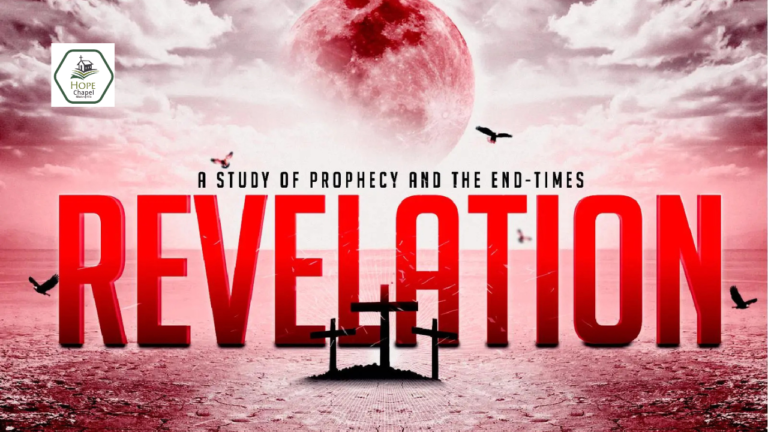
Revelation 4 is one of those passages that can feel overwhelming at first glance. Lightning, thunder, strange creatures covered in eyes, elders casting crowns. But beneath all of that imagery is a powerful and deeply personal message about who God is and what it means to truly worship Him.
Why Does Revelation 4 Feel So Strange?
The Book of Revelation describes scenes that feel like they belong in a fantasy novel. That is exactly the point. Human words were never designed to fully capture the reality of heaven. John did his best to describe what he saw, just as the prophet Ezekiel did centuries before him.
The danger is not that these images are confusing. The danger is that we have spent so long looking at a tamed, domesticated version of Jesus that we have forgotten how truly great He is. When we reduce God to our size, we shrink our faith along with Him.
Revelation 4 is an invitation to expand your picture of who God really is.
What Do the Thunder and Lightning Around God’s Throne Mean?
Verse 5 opens with a striking image:
“From the throne came flashes of lightning, and rumblings and peals of thunder, and before the throne were burning seven torches of fire, which are the seven spirits of God.” – Revelation 4:5 English Standard Version (ESV)
This is not decorative. Throughout Scripture, thunder and lightning in the presence of God signal His majesty and coming judgment. We see this same imagery in Exodus 19:16:
“On the morning of the third day there were thunders and lightnings and a thick cloud on the mountain and a very loud trumpet blast, so that all the people in the camp trembled.” – Exodus 19:16 English Standard Version (ESV)
God was showing His power to Israel. In Revelation, that same imagery points to a coming judgment that will be poured out during the tribulation period.
This should do two things for every believer. First, it gives us hope, knowing we are saved from that judgment. Second, it should stir a heart for those who are not yet in a relationship with Jesus Christ, because that judgment is real and it is coming.
What Do the Seven Torches of Fire Represent?
The seven torches burning before the throne represent the Holy Spirit in His fullness. The number seven points to the sevenfold ministry described in Isaiah 6, covering wisdom, understanding, counsel, strength, knowledge, reverence, and deity.
Torches are not gentle. They are associated with battle. This imagery shows the Holy Spirit as battle-ready, prepared to act in the coming judgment.
Here is the contrast worth holding onto. To those who trust in Jesus, the Holy Spirit is a comforter and counselor. To those who reject Him, that same Spirit will be a consuming fire. The same God who extends grace to believers will not withhold justice forever.
What Is the Sea of Glass Before the Throne?
Verse 6 describes something beautiful in the middle of all this intensity:
“Before the throne there was as it were a sea of glass, like crystal.” – Revelation 4:6 English Standard Version (ESV)
The sea in Scripture often represents humanity. But this sea is completely still. No waves. No turbulence. In the middle of pending divine judgment, there is a picture of perfect peace.
This is the church at rest before Jesus Christ. Even as judgment approaches the world, His people are at peace in His presence. This is exactly what Paul describes when he writes about a peace that surpasses all understanding. God’s people do not have to be shaken by what is coming.
Who Are the Four Living Creatures Around the Throne?
Verses 6 through 8 introduce four living creatures, each with a different appearance: one like a lion, one like an ox, one with the face of a man, and one like an eagle in flight.
These are not animals. Ezekiel 10:15 identifies them as cherubim, a class of exalted angelic beings closely associated with God’s holy power. They are stationed in the inner circle of God’s throne, meaning they play a central role in what is about to unfold in Revelation.
Their four forms are significant. Together they represent all of creation:
- The lion represents wild creatures
- The ox represents domesticated animals
- The eagle represents all flying creatures
- The man represents the pinnacle of creation
All of creation, in a sense, is represented before the throne of God.
What Do the Six Wings and Eyes of the Creatures Symbolize?
The creatures are described as being full of eyes and having six wings. The eyes represent complete awareness, alertness, and deep knowledge of what God is about to do. Nothing escapes their attention.
The six wings speak to their supreme privilege and responsibility. Two wings cover their feet, a sign that they stand on holy ground and consider worship their permanent calling. Their primary occupation, both now and after the tribulation, is to worship God.
That is not a small detail. These powerful beings, who will play a role in the coming judgments of the earth, spend the vast majority of their existence doing one thing: giving God the worship He deserves.
What Does “Holy, Holy, Holy” Really Mean?
Day and night, without ceasing, the four living creatures declare:
“Holy, holy, holy, is the Lord God Almighty, who was and is and is to come!” – Revelation 4:8 English Standard Version (ESV)
Holiness is the only attribute of God that is repeated three times in Scripture. Not love, not power, not mercy. Holiness. That repetition is not accidental. It signals that holiness is God’s chief defining characteristic, His utter and complete separation from evil in every form.
God hates sin. One day He will pour out His full wrath upon it. But right now, we are living in a season of grace and mercy. God is extending that grace so that people can come to repentance and find life in Jesus Christ. That season will not last forever. The tribulation will come, and with it, the full weight of God’s judgment. But today, the door is still open.
Why Do the Elders Cast Their Crowns Before the Throne?
When the four living creatures begin to worship, the 24 elders respond. They rise from their thrones, cast their crowns before Jesus, and fall face down in worship. Verse 11 records their song:
“Worthy are you, our Lord and God, to receive glory and honor and power, for you created all things, and by your will they existed and were created.” – Revelation 4:11 English Standard Version (ESV)
The word translated “worthy” is the Greek word axios. In the Roman world, when a conquering general returned from battle, crowds would line the streets and shout “axios,” meaning worthy. The elders are using that same word to declare that Jesus alone has the right to receive all glory, honor, and power.
Notice what the elders are not doing. They are not preoccupied with their own position, their own crowns, or their own honor. They know that everything they have pales in comparison to the glory of Jesus Christ. So they cast it all at His feet.
What Does This Mean for How We Worship Today?
Worship is not a warm-up. It is not background music while people find their seats. Worship is the primary calling of every believer, modeled by the most powerful beings in heaven.
The word “worthy” literally means to give worth to the one who deserves it. When we gather together and sing praise to God, we are not performing. We are offering. We are declaring, with our voices and our hearts, that Jesus is worth everything.
That offering should flow naturally from what He has done. He has forgiven sin. He has deposited His righteousness in us. He has given us peace, joy, and love that the world cannot replicate. Worship is the response to all of that.
It does not require a perfect voice or a particular style. The most powerful worship is often the simplest. What matters is that it comes from a heart that is genuinely giving God the worth He is due.
Life Application
This week, pay attention to how you approach worship, whether on Sunday morning, in your car, or in a quiet moment at home. Are you showing up with expectation, or are you going through the motions? Are you giving God your full attention, or are you distracted by everything else on your plate?
The challenge this week is simple but not easy: choose one moment each day to stop, set aside distractions, and offer God genuine praise. Not because you feel like it, but because He is worthy. Let worship become a daily habit, not just a Sunday event.
Ask yourself these questions as you reflect on this message:
- Have I reduced God to a manageable size in my mind, and what would it look like to truly expand my view of who He is?
- When I worship, am I focused on giving worth to God, or am I focused on how it makes me feel?
- Am I living with an awareness that we are in a season of grace, and does that motivate me to share Jesus with the people around me?
- What crowns, whether achievements, comfort, or personal pride, am I holding onto instead of casting at His feet?
God is holy, holy, holy. He is worthy of far more than we could ever give. But He invites us to give what we have, freely and fully, as an act of love and gratitude for everything He has done.